
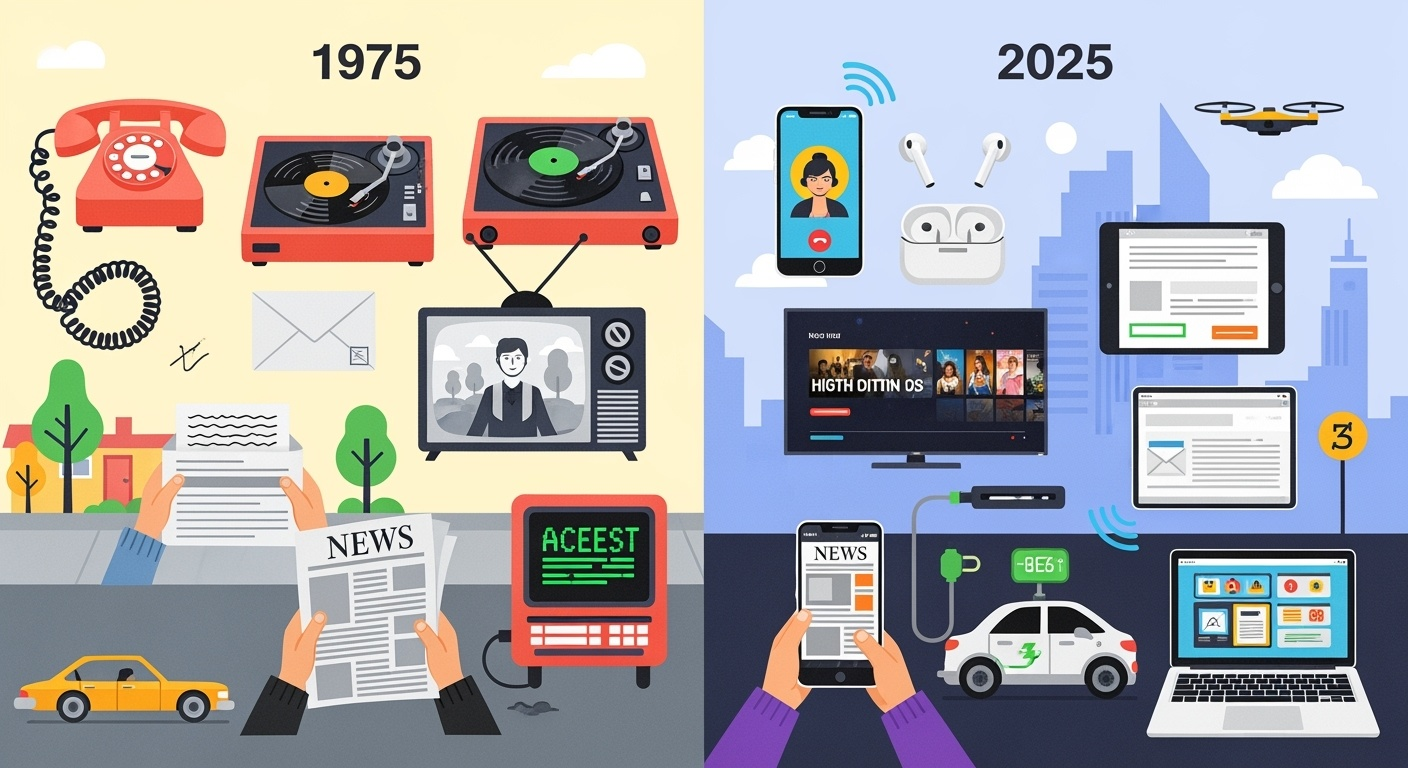
When 25 in 1975 Wasn’t What It Is Now in 2025!
Life was so much simpler then… or at least we like to tell ourselves.
Introduction
There’s something magical about turning 25. You’re old enough to know better, but still young enough to pretend you don’t. But me being 25 in 1975 and being 25 in 2025? That’s not just a generation gap, it’s a yawning canyon filled with avocado toast, TikTok dances, and 47 different streaming services. Let’s step back and compare how my life played out for a 25-year-old then and now, with a healthy dash of humor and a wink at the fact that sometimes, fewer options really did make things easier.
The Phone Life
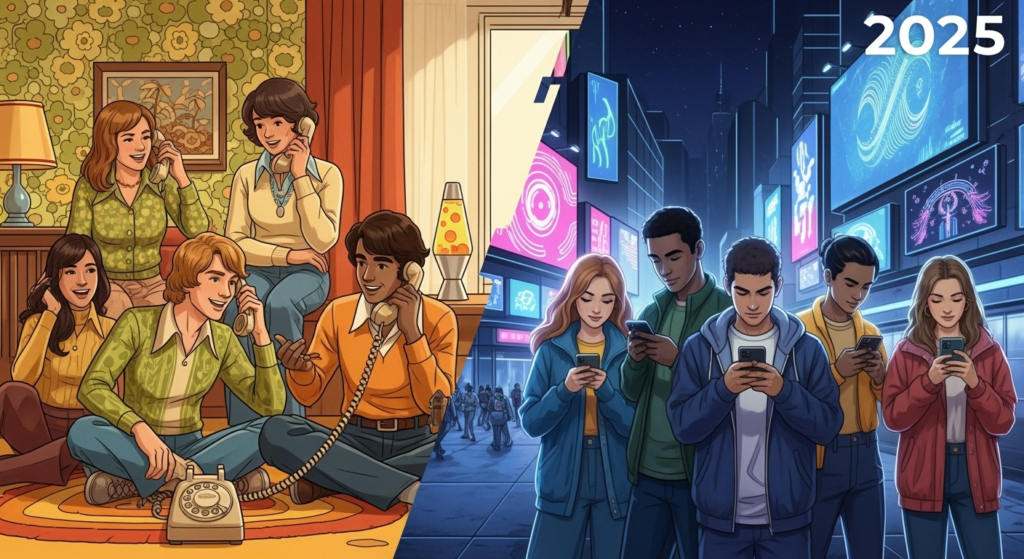
1975: At 25, your communication lifeline was a beige rotary phone, mounted to the wall, with a cord long enough to lasso a cow. Making long-distance calls was a financial decision that required budgeting, planning, and possibly a second job. If your mother picked up the extension while you were whispering sweet nothings, your love life ended in real time.
2025: At 25, your “phone” is a pocket-sized supercomputer that you mostly use to avoid calling anyone. You send 14 emojis, 3 memes, and one voice note instead of simply saying “I’ll be late.” Your entire social worth lives inside it, along with 300 blurry photos of brunch. Privacy? Ha! Meta already knows you’re late before you do.
Music, Sweet Music
1975: You listened to records, real, heavy vinyl records that doubled as weapons in a domestic dispute. If you wanted to hear your favorite song again, you had to physically lift the arm, place it back carefully, and hope your hand didn’t slip.
2025: You bark, “Hey Alexa, play that one song from that one show with that guy,” and it instantly queues up. Of course, you’ll still skip through 12 other songs before settling on the same Taylor Swift track you’ve played 27 times this week. Simpler? Maybe not. Louder? Definitely.
Dating Games
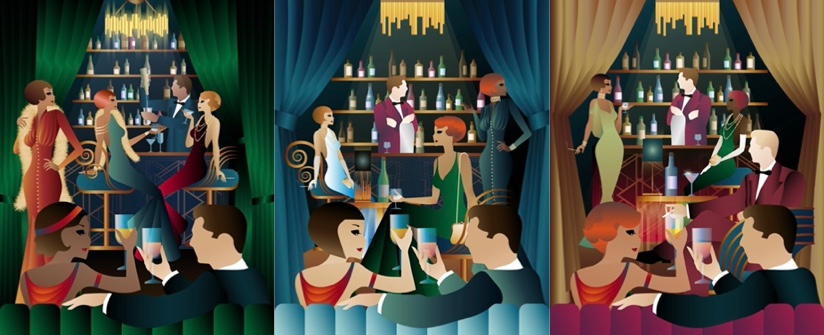
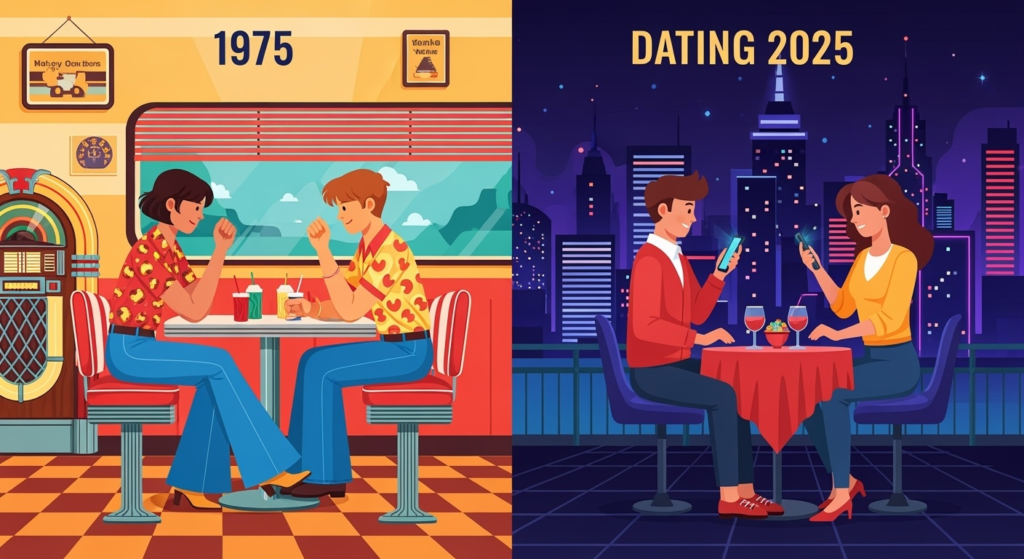
1975: You met people in person, at smoky bars, roller rinks, or through your cousin’s best friend’s sister. You summoned courage with two beers, not a filter pack and a bio that read: “I love long walks on the beach and hating Mondays.”
2025: Love now lives inside an app. Swipe left, swipe right, one lazy thumb could decide your future in-laws. Romance begins with “So what’s your Wi-Fi password?” and ends with ghosting before dessert. At least in 1975, when someone ghosted you, they had to move to a different city.
Food Glorious Food
1975: Dinner was meat, potatoes, and a vegetable boiled to a gray submission. Avocado was exotic; kale was decorative; tofu was suspicious. Eating out meant maybe a Chinese restaurant, if you were feeling adventurous.
2025: Dinner arrives via drone, tagged with nutrition info and a QR code. Milk now comes in almond, oat, soy, pea, and something labeled “plant-based beverage.” Kale is worshipped, quinoa is everywhere, and every bite must be photographed, filtered, and hashtagged. Meanwhile, the 1975 25-year-old simply ate the meal while it was hot.
Fashion (Or Crimes Against It)
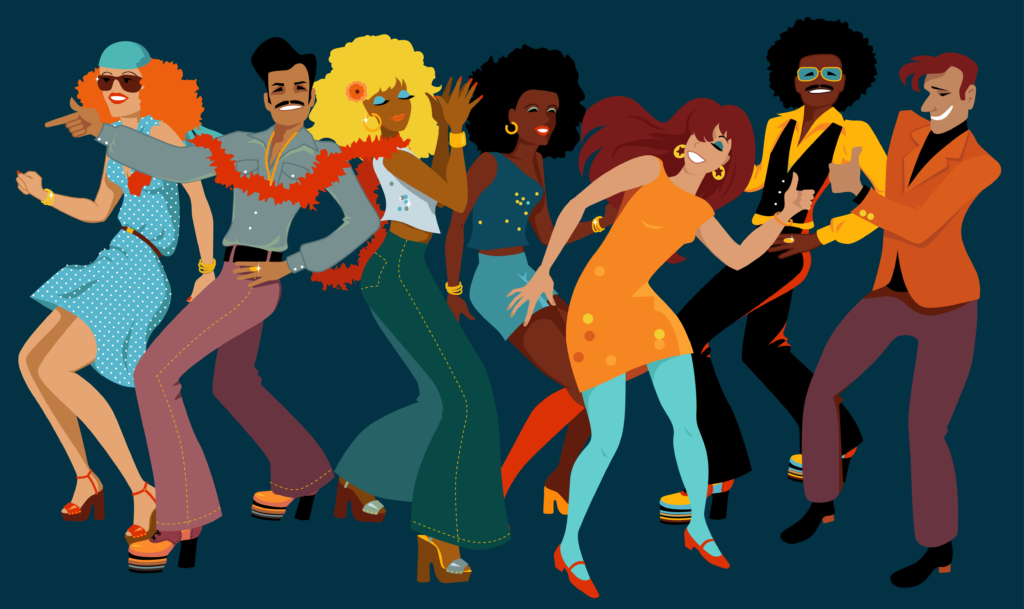
1975: Bell-bottoms, wide collars, and polyester so flammable it was basically a fire hazard. Men sported sideburns that could have housed endangered birds. Women teased their hair to such towering heights that small aircraft needed clearance to pass overhead.
2025: Athleisure rules the world. You wear yoga pants whether you’ve ever done yoga or not. Sneakers are status symbols, and people trade them like fine wine. Tattoos, piercings, and neon hair are mainstream. Ironically, thrift shops now sell the very polyester disasters we tried to bury in 1975, at triple the price.
Travel
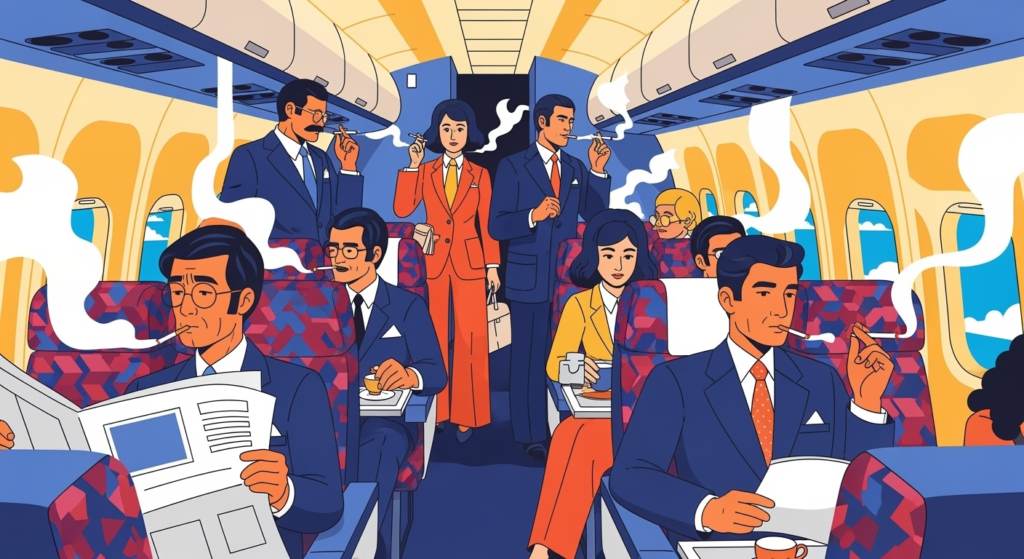
1975: You dressed up for flights. Airlines served free meals, real silverware, and legroom enough to practice yoga mid-air. Yes, you could smoke in the cabin (and everyone smelled like an ashtray), but nobody charged you $30 for a carry-on.
2025: Air travel feels like joining a cattle drive, barefoot, beltless, and holding your toiletries in a plastic bag. You pay for snacks, oxygen, and the privilege of not sitting in the middle seat. The only free thing left? The germs … lots of them.

Money Matters
1975: You had a wallet full of cash. If you didn’t have it, you didn’t buy it. Your bank teller knew your name and occasionally handed you a lollipop. A mortgage cost less than a used car does today.
2025: You tap your phone, your watch, or just your face to pay. You have no idea where your money goes except that Starbucks and Spotify seem to be getting most of it. Housing? The average 25-year-old rents a 400-square-foot apartment that costs more than their parents’ house payment ever did.
Entertainment
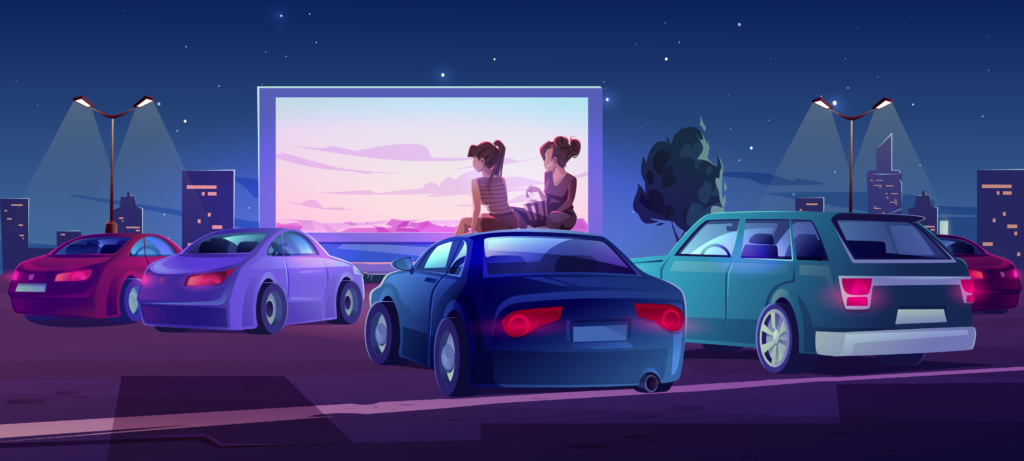
1975: You had three TV channels. When the President came on, your night was ruined. Remote controls didn’t exist … your kid was the remote. Movie night meant waiting in line, buying popcorn that cost less than a gallon of gas, and hoping the film didn’t break.
2025: You have 300 streaming services, all charging $12.99. You spend two hours scrolling through options and then rewatch The Office again. Movie theaters still exist, but the popcorn now costs the same as a car payment.
Fitness
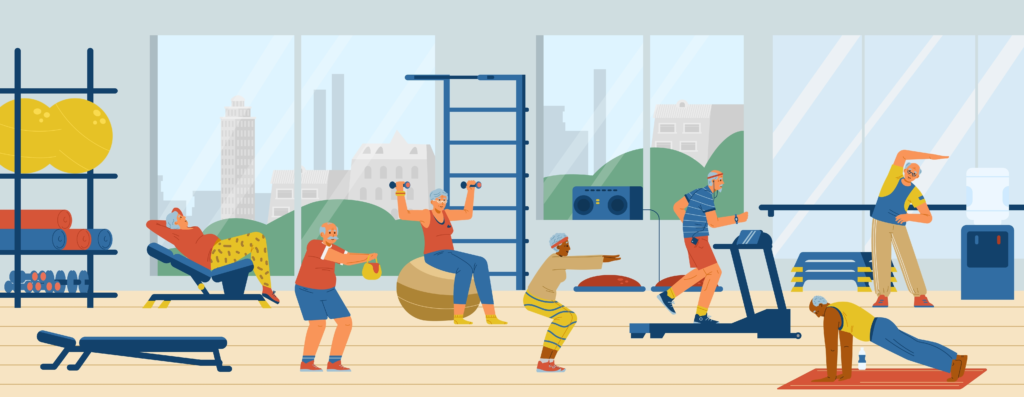
1975: Exercise happened naturally. You walked to the store, mowed your own lawn, and chased your own kids. Maybe you went disco dancing. Jane Fonda’s workout empire was still in spandex infancy.
2025: You pay $150 a month to sit on a stationary bike, shout “woo!” at an instructor named Blaze, and stare at a screen showing you’re “competing” with 3,000 strangers in Tokyo. Progress?
Conclusion
So, which was better, being 25 then or now? In 1975, life ran slower, cheaper, and with far fewer choices. In 2025, everything happens instantly, expensively, and with endless options you don’t really need. But here’s the secret: whether you were spinning vinyl in 1975 or swiping right in 2025, you were still just 25, hopeful, clueless, broke, and convinced the world would eventually figure itself out. Life was simpler then, sure. But maybe the chaos of now is just the modern version of simple, only with Wi-Fi, oat milk, and monthly subscription fees.